Pop Culture Lifestyle Shifts and the Boom in App-Controlled High-Tech Kitchens
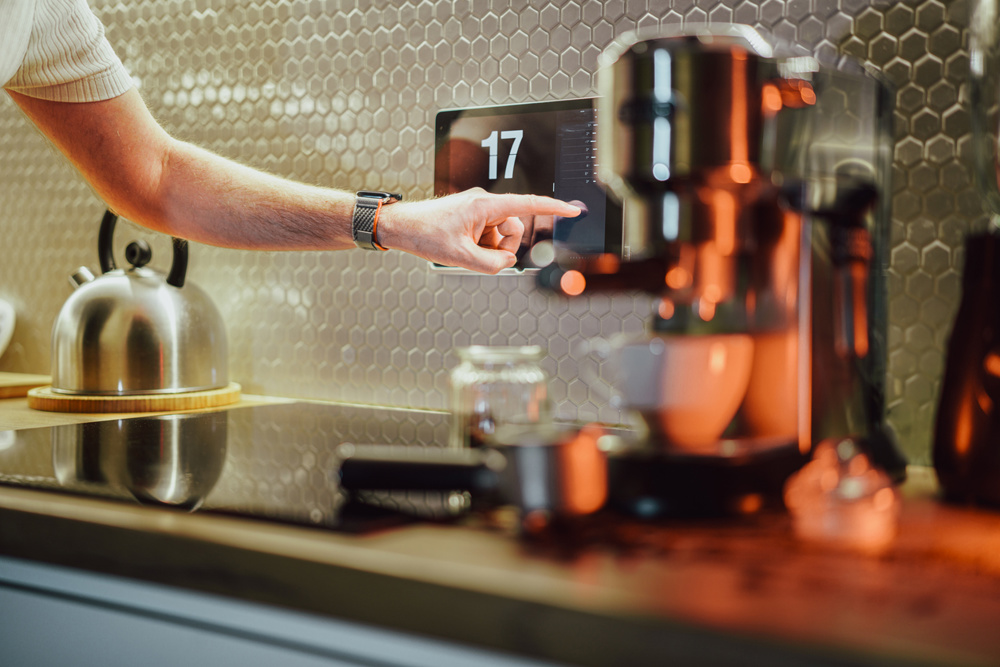
Pop culture has turned your kitchen into a lifestyle statement. App-controlled appliances let you preheat ovens remotely, monitor your fridge, and brew coffee with just your voice. They're not just convenient — they're cultural currency. With over 40 million Americans owning voice assistants and the smart kitchen market projected to hit $64 billion by 2030, you're part of a fast-moving shift. There's even more to uncover about what's driving this tech-fueled kitchen revolution.
From Utility Space to Lifestyle Stage
For most of the twentieth century, kitchen technology focused on efficiency. Refrigerators kept food cold, ovens heated meals, and dishwashers reduced manual labor. These appliances were improvements, but they rarely defined personal identity. That began to change in the 2010s with the rise of smart homes.
As smartphones and Wi-Fi connectivity spread into every corner of daily life, appliance manufacturers realized that kitchens could become part of the connected ecosystem. Suddenly, everyday tools gained digital capabilities. What once required physical interaction now happened through screens and voice commands.
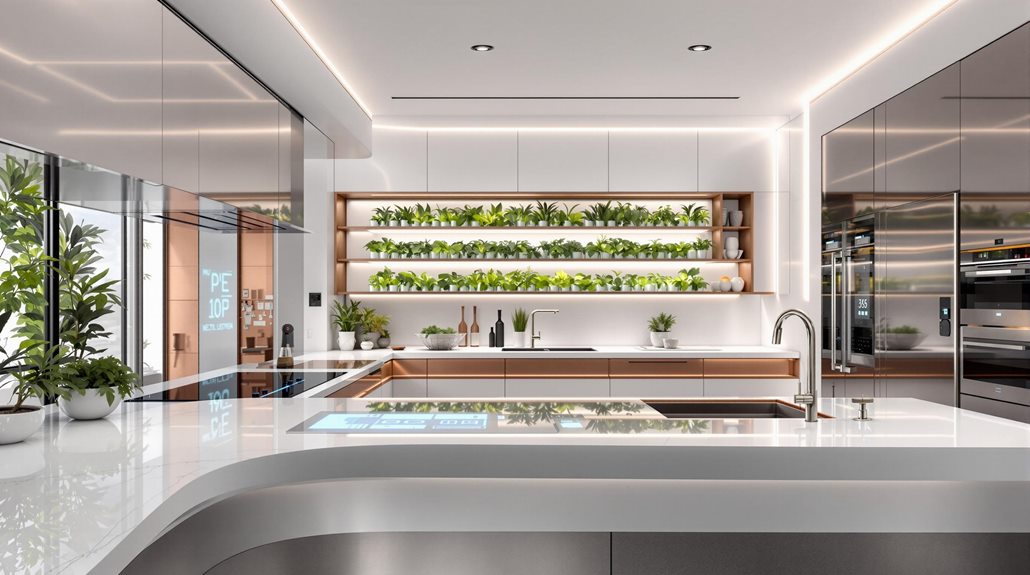
At the same time, home design culture was shifting. Kitchens were becoming open, central spaces in modern homes, often visible from living rooms and social areas. Instead of being hidden behind walls, the kitchen became a visual centerpiece of domestic life. Technology helped transform it into something even more symbolic: a demonstration of how modern a home—and its owner—could be.
What App-Controlled Kitchen Appliances Can Actually Do
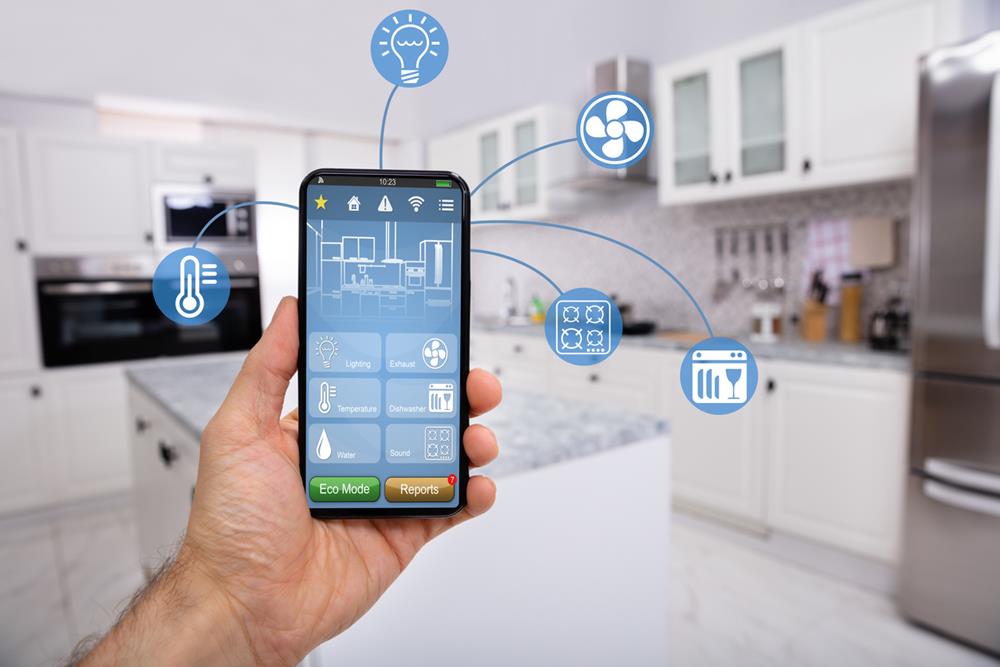
Modern app-controlled kitchen appliances have evolved far beyond simple on/off switches—they're now full-featured smart systems. It puts precision cooking, energy management, and real-time monitoring directly in your hands. You can preheat ovens, check fridge cameras, and schedule dishwashers during off-peak hours—all from your smartphone. Built-in sensors automatically adjust temperatures, while AI identifies food and recommends precise cooking modes.
Think of capabilities like self-heating soup containers paired with app connected cookbooks that guide you through every step hands-free. Voice assistant compatibility with Alexa, Google Assistant, and Apple HomeKit lets you set timers or start brewing coffee without touching a single button.
Inventory management features track expiration dates and update shopping lists automatically, making your kitchen smarter, more efficient, and genuinely responsive to how you actually cook. Some appliances even receive software updates over time that unlock entirely new cooking modes, like Air Fry or Steakhouse, long after the product has been purchased.
Check out MrPopCulture.com and learn more about pop culture trends in High-tech Kitchen Appliances.
Why Kitchen Appliances Became a Social Media Flex
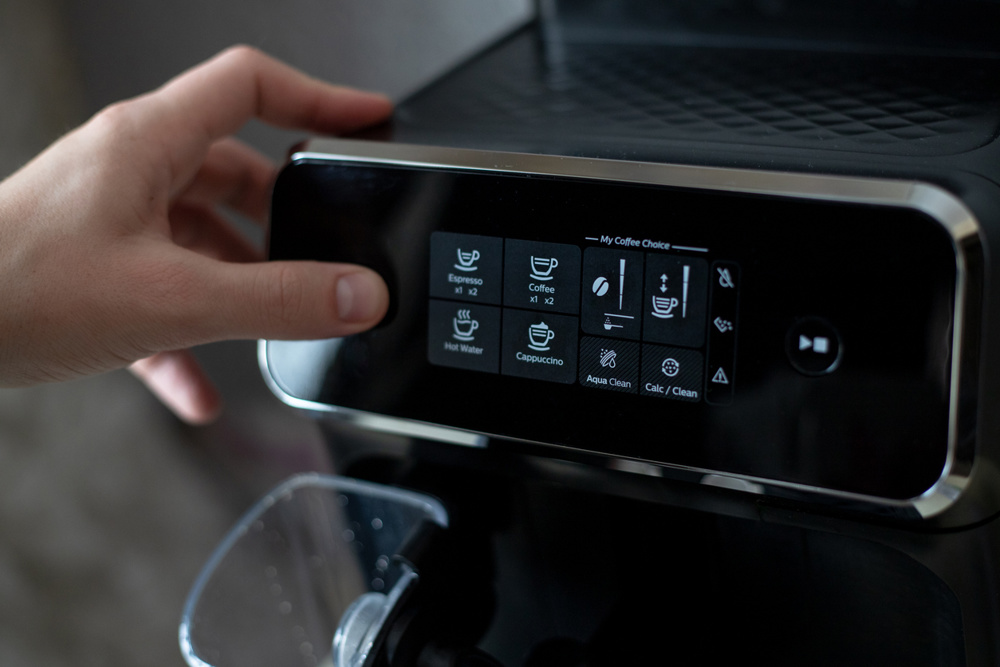
When a gleaming smart fridge or a voice-controlled espresso machine shows up in the background of someone's Instagram reel, it's rarely accidental. Aesthetically pleasing device designs and lifestyle brand associations have transformed kitchen appliances into deliberate status signals. Here's what's actually being communicated:
- Wealth proximity — Premium smart appliances silently announce you've invested in an elevated living standard
- Tech fluency — Voice-activated cooking setups signal you're digitally native and effortlessly modern
- Curated efficiency — AI-managed kitchens suggest your lifestyle runs on optimization, not chaos
- Real estate ambition — Connected kitchens photograph like showrooms, boosting perceived home value instantly
With over 40 million Americans already owning voice assistant devices, your smart kitchen isn't just functional—it's cultural currency. The global smart kitchen appliances market is projected to reach USD 32.7 billion by 2034, reflecting just how deeply this technology has embedded itself into modern consumer identity.
Why Smart Kitchen Appliances Are Selling Faster Than Ever
The demand for connected appliances reflects broader changes in how people think about their homes. During the COVID-19 pandemic, millions of people spent more time cooking at home than ever before. That experience pushed many households to reconsider the value of investing in kitchen upgrades.
At the same time, remote work increased the importance of comfortable, technologically equipped living spaces. Homes were no longer just places to sleep and relax—they became offices, gyms, and social spaces. Smart kitchen appliances fit naturally into this shift. Market researchers estimate that the global smart kitchen appliance market could reach around $64 billion by 2030.
It grows steadily as connectivity and artificial intelligence become standard features in household technology. Younger consumers are especially driving the trend. Millennials and Gen Z homeowners often expect devices to integrate seamlessly with their smartphones and smart home ecosystems. For them, an appliance that cannot connect to an app can feel outdated.
How AI Is Changing the Way We Cook
Artificial intelligence is beginning to play a larger role in kitchen technology. Many smart appliances already collect data about how they are used. Over time, these systems can learn patterns and adapt to household habits. For example, a smart oven might notice that a user frequently cooks certain meals and automatically recommend optimal settings.
Refrigerators can track food expiration dates and send reminders when ingredients should be used. Some experimental systems go even further by suggesting recipes based on what is already inside the fridge. This data-driven approach could reshape everyday cooking routines.
Instead of relying entirely on memory or manual planning, households may increasingly rely on digital systems that track ingredients, suggest meals, and optimize energy use. In this sense, cooking becomes partially automated—not replacing human creativity, but augmenting it with data.
Which App-Controlled Appliances Deliver the Most Value?
Five app-controlled appliances stand out as the strongest contenders for kitchen value in 2025, each targeting a different cooking need. Whether you're prioritizing cost effective automation benefits or compelling remote management features, these options deliver measurable results:
- Instant Pot Pro Plus ($149) — saves 4.2 weekly hours with WiFi monitoring and 800+ recipes
- Chef iQ Smart Cooker — built-in scale, Bluetooth/WiFi pairing, and eco-friendly idle mode streamline daily cooking
- Vitamix Ascent X2 — smart jar detection auto-adjusts performance, expanding into chopping, slicing, and shredding
- Ninja Programmable Brewer ($179) — WiFi scheduling and Alexa control deliver consistent, programmable coffee preparation
You'll notice each appliance removes friction from specific routines, making smarter cooking genuinely accessible without unnecessary complexity or steep learning curves. The June Oven Premium further raises the bar with AI food recognition and carbon fiber heating elements that achieve 40% faster preheat than traditional ovens.
How Smart Appliances Learn Your Cooking Habits Over Time
The more you cook, the smarter your appliances get — and that's not a marketing tagline. Every roast, reheated leftover, and skipped grocery run feeds your kitchen's appliance learning efficiency. Over time, your fridge, oven, and dishwasher build a behavioral profile that works quietly in your background.
- Your oven auto-adjusts cooking time and temperature based on meals you've made before.
- Your fridge tracks ingredient levels and expiry dates, nudging you toward household waste reduction.
- Your dishwasher reads load size and soil level, calibrating water and heat accordingly.
- Your apps learn peak usage times, shifting energy consumption to cut costs without sacrificing performance.
You're not just cooking — you're training a system that cooks smarter with you. AI algorithms continuously monitor operational metrics and flag anomalies. It enables predictive maintenance alerts that notify you to service or replace components before a breakdown disrupts your kitchen routine.
The Real Cost of Building an App-Controlled Kitchen Setup
Building a smarter kitchen sounds compelling until you see the price tag. A full renovation runs $150–$250 per square foot, and a mid-range remodel easily reaches $30,000–$60,000. Your kitchen renovation budget must account for more than appliances alone.
Appliance integration challenges add up fast. Panel-ready smart appliances start at $200–$1,200, but premium connected models cost $5,000–$20,000 each. Layer in custom cabinetry at $500–$1,200 per linear foot, countertops up to $4,500, and electrical work hitting $800, and your totals climb quickly.
Labor compounds everything. Contractor work alone represents 15–25% of your total project cost. On a $70,000 build, that's $10,500–$17,500 before you've purchased a single smart device. Prioritize which tech features genuinely serve your lifestyle before committing your budget. Beyond labor percentages, factors like uneven floors, existing plumbing obstacles, and the removal of old cabinets can all drive up your total installation cost.
Where the App-Controlled Kitchen Market Is Headed Next
After spending six figures on smart appliances and custom cabinetry, you'll want to know whether this market keeps evolving or plateaus. It won't plateau. The app-controlled kitchen market hits USD 64 billion by 2030, growing at 16.8% annually. Data driven kitchen innovations and emerging user experiences are reshaping how you cook, eat, and manage your home.
Expect these four developments next:
- AI assistants that auto-generate meals from whatever ingredients you toss in
- AR cooking interfaces that project real-time instructions onto your countertop
- Predictive maintenance alerts that notify you before appliances fail
- Advanced freshness sensors inside refrigerators that cut household food waste substantially
North America leads this expansion, but every region is accelerating fast. Asia-Pacific is positioned as the fastest-growing region during the forecast period. It signals that the demand for app-controlled kitchen technology is becoming a truly global phenomenon.
Conclusion
The rise of app-controlled kitchen appliances reflects more than a technological upgrade—it represents a cultural shift in how people think about domestic life. Today’s kitchens are no longer just spaces for preparing food. They are connected hubs where technology, lifestyle, and design intersect.
Smart appliances offer convenience and efficiency, but they also serve as symbols of modern living. In an era where homes increasingly reflect digital identity, the kitchen has quietly become one of the most visible stages for that transformation.