Facts About Kitchen Layouts: Why the “Work Triangle” Still Shows Up Everywhere
The kitchen work triangle connects your sink, stove, and refrigerator into a defined workflow zone. It comes from nearly a century of efficiency research, originally developed by industrial psychologist Lillian Gilbreth. Each leg should measure between 4 and 9 feet, keeping your total perimeter under 26 feet. This setup reduces unnecessary movement, improves safety, and keeps traffic out of your prep zone. There's a lot more to this concept than most homeowners realize.
The result was a simple but powerful insight: when key kitchen functions are arranged efficiently, cooking becomes faster, safer, and less physically demanding. Today, the work triangle continues to shape kitchen design—not because it’s trendy, but because it still works.
What Is the Kitchen Work Triangle?
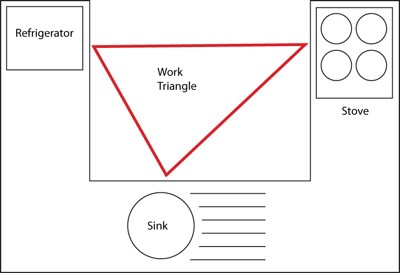
The kitchen work triangle is a design principle that connects three key work areas—the cooktop, sink, and refrigerator—with imaginary lines to form a triangular configuration. You'll also hear it called the golden triangle, a nod to its triangle origins in architectural research focused on natural task flow.
Designers developed it by observing how cooks moved between cleaning, cooking, and food storage during meal prep. Each point serves a distinct purpose: the sink handles cleaning and food prep, the stove manages cooking, and the refrigerator provides storage access. Together, they form the core of an efficient kitchen workflow.
While triangle alternatives exist for modern multi-cook spaces and open layouts, the original concept still drives smarter kitchen design by reducing unnecessary movement and keeping your workspace ergonomic and functional.
The Origins of the Kitchen Work Triangle
The work triangle dates back to the early twentieth century, when researchers began studying household efficiency in the same way factories studied assembly lines. Lillian Gilbreth, an industrial psychologist and pioneer in motion-study research, played a major role in this effort. She analyzed how people moved through kitchens while preparing meals and noticed that most cooking tasks revolved around three core stations:
- the refrigerator, where food is stored
- the sink, where ingredients are cleaned and prepared
- the stove, where meals are cooked
Gilbreth and other researchers realized that arranging these three areas efficiently could reduce unnecessary steps during cooking. By connecting the three points with imaginary lines, they formed what became known as the kitchen work triangle.
The idea gained popularity in the 1940s and 1950s as kitchen design became more standardized in American homes. Builders adopted the concept because it offered a clear, efficient layout that worked for most households. Although kitchens have evolved dramatically since then, the basic principle has remained surprisingly resilient.
The Ideal Measurements Behind the Triangle
Knowing the triangle's purpose is one thing, but putting it to work means understanding the specific measurements that make it function. Each leg of the triangle connects your refrigerator, sink, and stove, and should measure between 4 and 9 feet.
Triangle proportional measurements matter here — the total perimeter must stay between 13 and 26 feet, keeping your workspace balanced without feeling cramped or stretched. Triangle leg angle balance depends on no single leg dominating the layout. If one leg runs too long, you're adding unnecessary steps during meal prep.
Obstacles like full-height cabinets or islands can't interrupt the path by more than 12 inches, and major traffic patterns shouldn't cut through the triangle at all. Distance between each working area should fall within 4 to 8 feet to ensure the three points remain accessible without forcing unnecessary movement across the kitchen.
The Efficiency Benefits That Kept This Concept Alive
Once you understand the triangle's measurements, the efficiency benefits behind it become clear. The layout cuts unnecessary movement, so you're spending less time walking and more time cooking. Ergonomics optimization plays a direct role here—you're avoiding hard turns, reducing fatigue, and keeping everything within natural reach.
The design delivers real productivity enhancements through three core advantages:
- Reduced movement – Your sink, refrigerator, and cooktop stay close, eliminating back-and-forth trips during meal prep.
- Improved workflow – You move logically from storage to washing to cooking without interruption.
- Enhanced safety – Traffic stays out of your work zone, lowering the risk of spills and collisions.
These benefits explain why the triangle concept has endured—it simply makes cooking easier and more intuitive. It remains especially well-suited for small to medium kitchens, where its straightforward structure delivers the most measurable impact.
Which Kitchen Shapes Work Best With the Triangle?
Although the work triangle is a flexible concept, certain kitchen shapes support it particularly well.
- L-shaped kitchens place appliances along two adjoining walls, allowing the triangle to form naturally across the corner of the room.
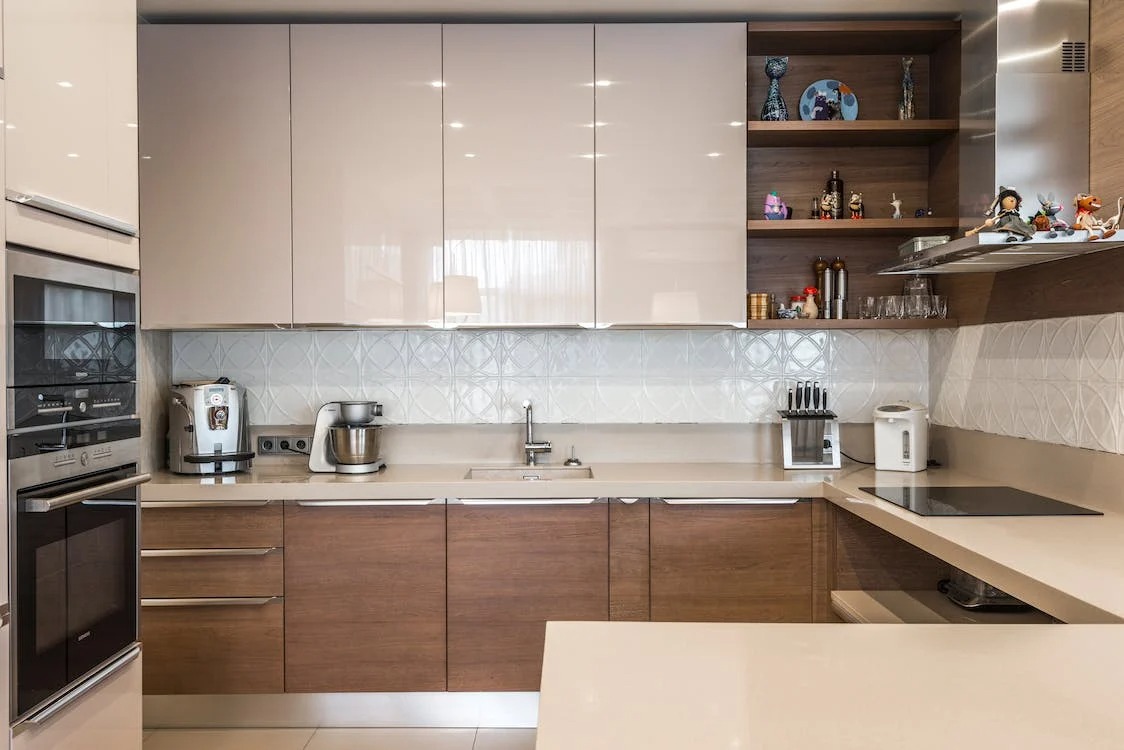
- U-shaped kitchens provide three continuous walls of cabinetry and workspace, making it easy to position each triangle point within comfortable reach.
- Galley kitchens, which consist of two parallel counters, compress the triangle into a narrow space where movement remains efficient.
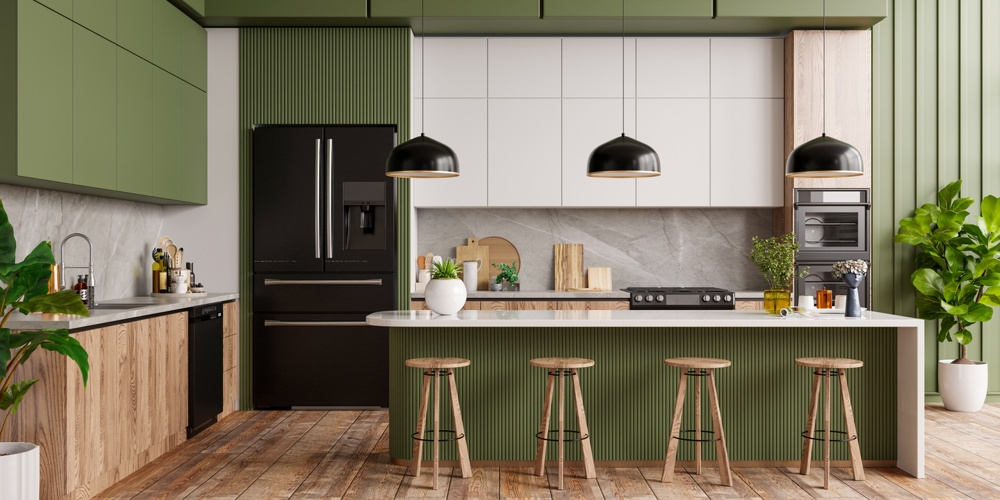
- In larger kitchens, island layouts often incorporate the sink or cooktop into the island itself, forming a triangle that balances the island with surrounding appliances.
- Even G-shaped kitchens, which add a peninsula to a U-shaped layout, can maintain the triangle while expanding the available workspace.
Each layout adapts the triangle differently, but the underlying principle remains the same: keep the three key work areas connected without forcing long or awkward paths.
Check out more fascinating kitchen trivia and facts today!
Does the Kitchen Work Triangle Work in Small Kitchens?
Those five layouts all assume you have enough room to work with, but what happens when your kitchen is genuinely small? Small kitchen modifications make the triangle still achievable through customized triangle layouts that scale everything down.
Here's what actually works in tight spaces:
- Shorten each leg below the standard 4-foot minimum when necessary
- Use single-wall arrangements to keep all three zones within arm's reach
- Integrate an island with a built-in sink or cooktop as a triangle point
You'll want to keep cabinet intrusions under 12 inches and avoid placing tall pantries or bulky appliances inside the triangle path. Prioritizing clear pathways between your stove, sink, and refrigerator keeps movement efficient even when square footage is limited.
How the Kitchen Work Triangle Reduces Traffic, Spills, and Wasted Steps
The kitchen work triangle isn't just about convenience—it's a system designed to cut wasted movement, reduce accidents, and keep traffic out of your core work zone. Proper space utilization keeps your sink, stove, and refrigerator 1.2–2.7m apart, eliminating unnecessary crossings. Workflow optimization sequences your movement naturally—fridge to sink to stove—so you're never backtracking.
BenefitWhat It PreventsHow You FeelReduces wasted stepsLong walks mid-prepLess exhaustedControls traffic flowCrowding and collisionsMore confidentLowers spill riskObstructed pathsSafer and calmerEnhances efficiencyDisorganized sequencingIn controlPromotes safetyCross-contamination routesReassured
Islands, Peninsulas, and the Modern Kitchen Work Triangle
Modern kitchens often include islands or peninsulas, and both can work with—or against—your kitchen work triangle depending on how you position them. Ergonomic considerations and spatial design efficiency determine whether these features improve or disrupt your workflow.
Islands require 42–48 inches of perimeter clearance and shouldn't intersect your triangle deeper than 12 inches. Peninsulas attach to existing counters, provide three-sided access, and suit smaller kitchens without sacrificing storage or seating. Peninsulas can also define separate living spaces in studio or loft-style apartments by using contrasting colors or pendant lighting to visually frame distinct zones.
Cost differences matter too—peninsulas average $3,100 to install, while islands range from $900 to $6,500 with added structural demands. Choosing correctly means matching your layout's scale to the right feature, keeping traffic moving and appliances accessible without forcing awkward detours through your kitchen.
When the Kitchen Work Triangle Doesn't Work
While the kitchen work triangle works well in theory, it breaks down in several real-world scenarios. If you're cooking with family or a partner, the tight three-point layout creates congestion and collision risks. You'll also find it ignores contemporary cooking behavior, like using microwaves, dishwashers, or separate wall ovens that need their own landing zones.
Food safety research backs this up too. Studies across 64 households in five European countries found no link between triangle dimensions and reduced cross-contamination, meaning the design prioritizes ergonomics, not hygiene. Flexible kitchen configurations simply demand more than three fixed points can offer, making strict triangle adherence more restrictive than helpful. The concept itself dates back to the 1940s kitchen culture, a time when far fewer appliances existed and a single cook was simply assumed to be the norm.
Why the Work Triangle Still Matters Today
Even as kitchens become more complex—with smart appliances, multiple cooks, and open layouts—the basic logic behind the work triangle continues to influence design. It remains one of the clearest ways to organize a kitchen around the tasks people perform most often.
The triangle encourages efficient movement, keeps essential tools within reach, and separates cooking from household traffic. Modern designers may adapt the concept to fit larger spaces or new technologies, but they rarely ignore it entirely. Nearly a century after Lillian Gilbreth studied kitchen movement patterns, her insights still shape how homes are built.
Conclusion
The kitchen work triangle has survived generations of changing styles, technologies, and household habits. From mid-century suburban kitchens to today’s open-concept homes, the idea continues to guide how appliances and workspaces are arranged. Its staying power comes from its simplicity.
By connecting the refrigerator, sink, and stove in a logical pattern, the triangle supports the natural rhythm of cooking. Design trends may come and go, but the fundamental challenge of organizing a kitchen remains the same.